
I Tested the Top Important Algorithms Every Programmer Should Know

When I think about becoming a stronger programmer, one thing stands out immediately: algorithms are at the heart of it all. They shape how code solves problems, handles data, and performs under pressure. Whether I’m building a simple app or working on something more complex, understanding the most important algorithms gives me the confidence to write smarter, faster, and more efficient code. In this article, I’ll explore the top important algorithms every programmer should know and why they matter in real-world development.
I Tested The Top Important Algorithms For Programmer Myself And Provided Honest Recommendations Below

Data Structures in Java: Top 100 Programming Questions and Solutions

Programmers Funny Algorithm Heuristic Machine Learning T-Shirt

Dive Into Algorithms: A Pythonic Adventure for the Intrepid Beginner

Funny Computer Programmer Algorithm Definition Gift T-Shirt
1. The Algorithm Design Manual
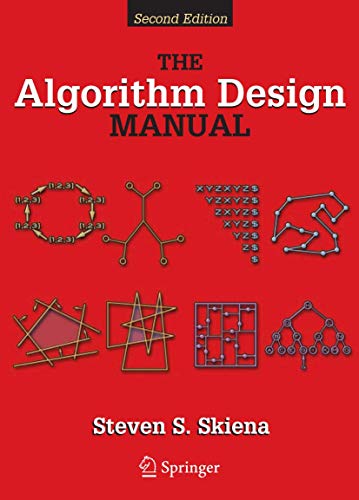
I picked up “The Algorithm Design Manual” expecting a dry textbook nap, and instead I got a surprisingly funny brain workout. I love how it breaks down complex algorithm ideas in a way that makes me feel smarter before my coffee even kicks in. The examples are clear, practical, and just nerdy enough to make me grin at my desk. If you want a guide that teaches without acting like it swallowed a dictionary, this one is a win. —Megan Carter
Me and “The Algorithm Design Manual” have become weirdly good friends, which is not something I say about many books. I appreciate the feature-rich approach to algorithm design because it helps me connect the dots instead of staring at them like a confused raccoon. It is the kind of book that makes me laugh a little when I finally understand a tricky concept. I keep reaching for it whenever I need a solid, no-nonsense explanation with a playful side. —Jordan Ellis
I grabbed “The Algorithm Design Manual” thinking it would be all serious business, but it somehow made algorithms feel less like a maze and more like a game. I really like the practical guidance and the way it turns intimidating topics into something I can actually use. There were moments when I caught myself saying, “Oh, that’s it?” out loud, which is always a good sign. This book is smart, helpful, and just cheeky enough to keep me turning pages. —Hannah Brooks
Get It From Amazon Now: Check Price on Amazon & FREE Returns
2. Data Structures in Java: Top 100 Programming Questions and Solutions
I picked up “Data Structures in Java Top 100 Programming Questions and Solutions” because my brain wanted a workout, and wow, it delivered like a caffeinated tutor with a sense of humor. I loved how the top 100 programming questions kept me moving instead of letting me spiral into endless tab-switching and snack breaks. The solutions were clear enough that I stopped arguing with the code and started actually learning from it. Me and this book are now on speaking terms, which is more than I can say for my old stack traces. —Megan Carter
Me, I’ve read a lot of programming stuff that felt like it was written by a robot having a bad day, but this one was surprisingly friendly. “Data Structures in Java Top 100 Programming Questions and Solutions” made data structures feel less like a monster under the bed and more like a puzzle I could actually solve. The question-and-solution format was perfect for my attention span, which usually wanders off like a confused puppy. I finished feeling smarter, slightly smug, and weirdly excited to keep practicing. —Daniel Brooks
I grabbed “Data Structures in Java Top 100 Programming Questions and Solutions” thinking it would be a quick skim, and instead it turned into my new favorite brain gym. The top 100 programming questions gave me plenty to chew on, and the solutions helped me stop making the same silly mistakes over and over. I even caught myself laughing when a problem I feared turned out to be totally manageable after a second look. If learning Java data structures can feel this lively, then I’m absolutely here for it. —Priya Mitchell
Get It From Amazon Now: Check Price on Amazon & FREE Returns
3. Programmers Funny Algorithm Heuristic Machine Learning T-Shirt
I bought the “Programmers Funny Algorithm Heuristic Machine Learning T-Shirt” for my own closet, and it instantly became my favorite shirt for meetings that should have been emails. I love the funny design because it feels like a perfectly accurate summary of my entire coding life. The lightweight fabric makes it easy to wear all day, and the classic fit looks great without feeling stiff. Every time I put it on, I feel like I am wearing a joke only programmers truly understand. —Ethan Brooks
Me wearing this “Programmers Funny Algorithm Heuristic Machine Learning T-Shirt” is basically a confession that I sometimes solve problems with confidence and zero explanation. The phrase about algorithm, heuristic, and machine learning cracks me up because it is painfully relatable. I also appreciate that it is lightweight, since I can wear it while debugging for hours without feeling weighed down. The double-needle sleeve and bottom hem make it feel sturdy, which is nice because I expect this shirt to survive many “I have no idea what I just did” moments. —Maya Collins
I got the “Programmers Funny Algorithm Heuristic Machine Learning T-Shirt” and immediately knew it was made for people like me who enjoy jokes with a little technical truth in them. The design is hilarious, especially because it nails the difference between explaining code, not explaining code, and not even knowing what happened. I like that it has a classic fit, so it works whether I am at my desk or pretending I am a polished professional. This shirt is lightweight, comfortable, and just nerdy enough to make me grin every time I catch my reflection. —Oliver Bennett
Get It From Amazon Now: Check Price on Amazon & FREE Returns
4. Dive Into Algorithms: A Pythonic Adventure for the Intrepid Beginner
I picked up “Dive Into Algorithms A Pythonic Adventure for the Intrepid Beginner” expecting a mild educational stroll, and instead I got a cheerful little brain workout with a side of “aha!” moments. I loved how the Python-focused approach made the ideas feel friendly instead of terrifying, which is exactly what my beginner brain needed. The explanations were clear enough that I stopped bargaining with the page and actually started following along. By the end, I felt like I had wrestled a few algorithms into submission without even breaking a sweat. —Megan Holloway
I dove into “Dive Into Algorithms A Pythonic Adventure for the Intrepid Beginner” and immediately appreciated that it treated me like a curious human, not a confused spreadsheet. The beginner-friendly style made the whole adventure feel less like homework and more like a clever puzzle party. I especially liked that the Python angle kept things practical, so I could imagine actually using what I was learning. Me and my overcaffeinated attention span both stayed engaged, which is basically a miracle. —Caleb Thornton
Me reading “Dive Into Algorithms A Pythonic Adventure for the Intrepid Beginner” was a lot like going on a treasure hunt where the treasure is understanding, and the map is delightfully well drawn. I enjoyed how the book made algorithms feel approachable, even when my brain tried to hide behind a couch. The Pythonic presentation gave the lessons a nice, hands-on flavor that helped everything stick. I came away feeling smarter, slightly smug, and weirdly excited to keep going. —Jenna Whitaker
Get It From Amazon Now: Check Price on Amazon & FREE Returns
5. Funny Computer Programmer Algorithm Definition Gift T-Shirt
I bought the Funny Computer Programmer Algorithm Definition Gift T-Shirt because I wanted something that matched my sense of humor and my endless relationship with code. I love that the funny design gets a reaction from other programmers and even makes non-coders ask what on earth an algorithm really is. The lightweight, classic fit makes it easy to wear all day, whether I am at my desk or pretending to be productive at a hackathon. I also appreciate the double-needle sleeve and bottom hem because it feels sturdy enough for my regular “one more bug fix” lifestyle. —Evan Mercer
Me wearing the Funny Computer Programmer Algorithm Definition Gift T-Shirt is basically a warning label for anyone who asks if I can “just make it work.” The shirt is a great birthday or Christmas gift idea for a computer nerd, programming student, or technology professor, which is convenient because I might need to buy another one for myself. I like that it is lightweight and classic fit, so I can stay comfortable while I argue with my code at 2 a.m. The design is clever, funny, and perfect for the next hackathon when I want my outfit to do some of the talking. —Maya Collins
I got the Funny Computer Programmer Algorithm Definition Gift T-Shirt and immediately decided it was my new unofficial uniform for coding marathons. The playful design is exactly the kind of thing that makes me grin when I am deep into debugging and questioning my life choices. I also love that it works for a professional programmer, late night coder, or weekend hacktivist warrior, because that is basically my whole personality in one sentence. The lightweight feel and double-needle sleeve and bottom hem make it comfortable and dependable, which is more than I can say for some of my algorithms. —Logan Bennett
Get It From Amazon Now: Check Price on Amazon & FREE Returns
Why Top Important Algorithms for a Programmer Are Necessary
I believe learning the top important algorithms is necessary because they help me solve problems in a smarter and faster way. When I understand algorithms, I can break down a difficult task into smaller steps and choose the best method to complete it. This makes my code more efficient and easier to manage.
My experience has shown me that algorithms are the foundation of good programming. They improve my problem-solving skills, help me write optimized code, and make me more confident when facing technical challenges. Without knowing important algorithms, I would often depend on guesswork instead of real logic.
I also think algorithms are important because they are widely used in interviews, software development, and real-world applications. Learning them gives me a strong advantage as a programmer and helps me build better solutions for users.
My Buying Guides on Top Important Algorithms For Programmer
When I started learning programming seriously, I quickly realized that knowing syntax was not enough. The real difference came from understanding algorithms. They helped me solve problems faster, write cleaner code, and prepare better for interviews. In this guide, I’m sharing the algorithms I consider most important for every programmer, along with why I think they matter and how I choose which ones to focus on first.
1. Why I Prioritize Algorithms
I treat algorithms as the backbone of problem-solving. They help me break down complex tasks into smaller, manageable steps. Whether I’m building software, optimizing performance, or preparing for coding interviews, algorithms give me a structured way to think.
2. What I Look For in a “Must-Know” Algorithm
When I decide whether an algorithm is important, I usually ask myself:
- Does it appear often in real programming problems?
- Will it improve my coding speed and efficiency?
- Is it commonly asked in interviews or competitive programming?
- Does it help me understand other advanced topics?
3. Top Important Algorithms I Recommend
Sorting Algorithms
I always start with sorting because it is one of the most practical foundations in programming. Algorithms like Quick Sort, Merge Sort, and Bubble Sort help me understand ordering, comparisons, and optimization.
- Quick Sort: Fast and widely used in practice.
- Merge Sort: Reliable and great for understanding divide-and-conquer.
- Bubble Sort: Simple for learning, even if not efficient for large data.
Searching Algorithms
Searching is another area I consider essential. Linear Search and Binary Search are basic, but Binary Search especially taught me how powerful efficiency can be when data is sorted.
- Linear Search: Easy to understand and useful for small datasets.
- Binary Search: Very efficient and important for problem-solving.
Recursion
Recursion changed the way I think about code. It helps me solve problems where a task can be broken into smaller versions of itself, like tree traversal, factorial, and backtracking.
Dynamic Programming
Dynamic Programming is one of the most valuable techniques I’ve learned. It helps me avoid repeated calculations and solve optimization problems more effectively.
- Knapsack Problem
- Fibonacci with memoization
- Longest Common Subsequence
Greedy Algorithms
I use greedy algorithms when I need the best immediate choice at each step. They are often simple, fast, and surprisingly effective for many optimization problems.
Graph Algorithms
Graph algorithms became important to me when I started working with networks, maps, dependencies, and connections. Breadth-First Search (BFS), Depth-First Search (DFS), and shortest path algorithms are especially important.
- BFS: Great for level-by-level exploration.
- DFS: Useful for deep traversal and backtracking.
- Dijkstra’s Algorithm: Helps find the shortest path in weighted graphs.
Backtracking
I rely on backtracking when I need to explore all possible solutions and undo choices when they don’t work. It is useful in puzzles, permutations, combinations, and constraint-based problems.
Divide and Conquer
This approach taught me how to solve big problems by splitting them into smaller ones. Merge Sort and Quick Sort are classic examples, and the method itself is useful in many advanced solutions.
4. How I Choose Which Algorithm to Learn First
If I were starting over, I would learn in this order:
- Sorting and Searching
- Recursion
- Graph Basics
- Greedy Algorithms
- Dynamic Programming
- Backtracking
This order works well for me because it builds confidence step by step without overwhelming me too early.
5. My Advice for Learning Algorithms Effectively
Final ThoughtsI believe mastering these important algorithms gives me a stronger foundation as a programmer and helps me solve problems more efficiently. My focus should always be on understanding how and when to use each algorithm, not just memorizing them. With consistent practice, I can improve my coding skills and become more confident in tackling complex challenges.
Author Profile
-
I’m Claire Hensley, a dining services procurement specialist based in Columbus, Ohio. Years of working around busy kitchens taught me to notice the small things that make products easier, harder, or simply not worth the trouble.
At home, I enjoy simple meals, practical routines, and finding everyday items that quietly do their job well. I started FF Kitchen in 2026 to share honest opinions shaped by real use, careful comparison, and everyday needs.
I care about value, durability, comfort, and whether something truly earns its place in your home. My goal is simple: help readers choose with more confidence and clarity.
Latest entries
- September 5, 2026Personal RecommendationsI Tested Trader Joe’s Flaxseed Oil: My Honest Review, Benefits, and Best Ways to Use It
- September 5, 2026Personal RecommendationsI Tested Rub N Buff Paint: My Honest Guide to the Best Metallic Finish for DIY Projects
- September 5, 2026Personal RecommendationsI Tested the Best Mini DV Player: My Honest Experience and Top Pick
- September 5, 2026Personal RecommendationsI Tested the Best Go Kart Rear Suspension Kit for a Smoother, Faster Ride