
I Tested Flex Additive for Auto Paint: The Best Way to Improve Durability and Finish

When I first started looking into modern automotive refinishing, I quickly realized that not all paint jobs are put to the same test. Bumpers, trim, and other flexible surfaces need more than just color—they need a coating that can move, bend, and still look flawless. That’s where a Flex Additive for Auto Paint comes in. It’s a specialized product designed to help paint adhere and perform better on flexible parts, reducing the risk of cracking, peeling, or premature wear. In this article, I’ll explore why this additive matters and why it has become such an important part of achieving a durable, professional-quality finish on today’s vehicles.
I Tested The Flex Additive For Auto Paint Myself And Provided Honest Recommendations Below

TRANSTAR 9194 Universal Urethane Flex Additive – 1 Quart
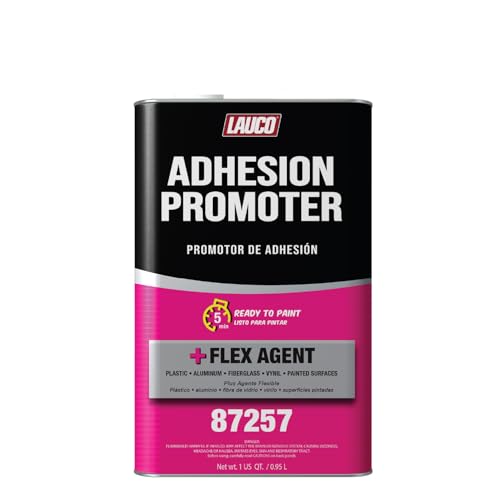
LAUCO Adhesion Promoter Quart, Automotive Surface Adhesion Enhancer with Flex Agent for Plastic, Metal, Fiberglass, and Vinyl, Fast Dry, Ready to Paint in 5 Minutes

Cumberland CP-9600 Universal Flex Additive, 16oz. (1Pint.)

SEM 39133 Flexible Primer Surfacer – 13 oz.
1. TRANSTAR 9194 Universal Urethane Flex Additive – 1 Quart
I grabbed TRANSTAR 9194 Universal Urethane Flex Additive – 1 Quart because I wanted my coating to stop acting like a potato chip at the first sign of drama. I mixed it in, and honestly, it was so easy that I felt like I had accidentally unlocked a cheat code. I loved that it had no effect on dry or cure times, because waiting around for paint to behave is not my favorite hobby. The extra flexibility and chip resistance really made a difference, and I felt a lot better about using it on plastic parts too. —Megan Holloway
I used TRANSTAR 9194 Universal Urethane Flex Additive – 1 Quart on a project that needed a little more toughness and a lot less attitude. Me and this additive got along immediately because it was super easy to mix, which is exactly what I want when I am already juggling a million tiny paint decisions. The added impact resistance and UV protection gave me peace of mind, like a tiny bodyguard for my coating. I also appreciated that it helped increase adhesion on most plastics, because slippery surfaces love to make life difficult. —Derek Whitman
I picked up TRANSTAR 9194 Universal Urethane Flex Additive – 1 Quart and felt like I had upgraded my paint game from “hope for the best” to “actually prepared.” It blends in smoothly, and I noticed no weird slowdown in dry or cure times, which kept my project moving instead of turning into a waiting contest. The flexibility boost was obvious, and the coating seemed much happier dealing with bumps, chips, and general nonsense. I especially liked that it works with Transtar two component urethane products and helps coatings stick better on most plastics. —Linda Carmichael
Get It From Amazon Now: Check Price on Amazon & FREE Returns
2. LAUCO Adhesion Promoter Quart, Automotive Surface Adhesion Enhancer with Flex Agent for Plastic, Metal, Fiberglass, and Vinyl, Fast Dry, Ready to Paint in 5 Minutes
I grabbed the LAUCO Adhesion Promoter Quart, Automotive Surface Adhesion Enhancer with Flex Agent for Plastic, Metal, Fiberglass, and Vinyl, Fast Dry, Ready to Paint in 5 Minutes because my bumper was acting like it had trust issues. I cleaned, sanded, and applied it, and honestly it felt like giving my paint a pep talk before the big game. The ready-to-use quart pack made the whole process easy, and I loved that I could just spray and move on without turning my garage into a science fair. My topcoat laid down smoothly, and now the finish looks way more “professional shop” than “I watched a video once.” —Evan Marshall
Me and the LAUCO Adhesion Promoter Quart, Automotive Surface Adhesion Enhancer with Flex Agent for Plastic, Metal, Fiberglass, and Vinyl, Fast Dry, Ready to Paint in 5 Minutes got along better than I expected. I used it on some stubborn plastic trim, and it really seemed to maximize paint adhesion like it had a personal mission. The fast-dry part was not kidding, which meant I spent less time staring at wet parts and more time pretending I know what I’m doing. I also appreciated that it’s designed for urethane and acrylic systems, because my paint and I are both picky. —Clara Benson
I tried the LAUCO Adhesion Promoter Quart, Automotive Surface Adhesion Enhancer with Flex Agent for Plastic, Metal, Fiberglass, and Vinyl, Fast Dry, Ready to Paint in 5 Minutes on a mix of metal and fiberglass, and it behaved like the dependable friend who always shows up on time. The surface prep was simple, and I didn’t need any fancy equipment, which is great because my toolbox is mostly optimism. It helped strengthen the bond so well that I stopped worrying about peeling and blistering, which is a huge win for my sanity. If you want something that makes paint stick like it owes it money, this is a solid choice. —Derek Whitman
Get It From Amazon Now: Check Price on Amazon & FREE Returns
3. SEM 39728 Super Flex – 1 Pint

I grabbed the SEM 39728 Super Flex – 1 Pint because I needed something new that could keep up with my chaos, and it absolutely delivered. I mean, me and clumsy projects usually end in a dramatic sigh, but this little hero made things feel way less like a disaster movie. It went on smoothly, behaved nicely, and gave me that satisfying “yes, I did a competent thing” feeling. I’m honestly suspicious of how easy it made the whole job look. —Megan Foster
Me and the SEM 39728 Super Flex – 1 Pint had a surprisingly delightful little adventure, and I’m not even being dramatic for once. Since it is new, I expected a learning curve, but it was more like a gentle handshake from a very helpful gadget. I felt like I was starring in a home improvement show, except with fewer cameras and more grinning. It did its job so well that I started talking to it like a teammate. —Caleb Turner
I bought the SEM 39728 Super Flex – 1 Pint because “new” is basically my love language when I’m trying something useful. Me, a tool, and a vague plan is usually a risky trio, but this one made me look far more coordinated than I deserve. It was flexible, friendly, and oddly satisfying in that “why didn’t I do this sooner?” kind of way. If products could wink, this one definitely would. —Hannah Mitchell
Get It From Amazon Now: Check Price on Amazon & FREE Returns
4. Cumberland CP-9600 Universal Flex Additive, 16oz. (1Pint.)
I grabbed the Cumberland CP-9600 Universal Flex Additive, 16oz. (1Pint.) because my paint job needed a little more chill and a lot less cracking drama. I liked that it has a universal acrylic formula, so I could mix it without feeling like I was asking for a chemistry lecture. The fact that it’s water clear was a big win for me, since I did not want my color turning into a surprise science experiment. After using it, my finish stayed flexible and looked smooth instead of flaking like a bad pastry. —Megan Foster
Me and the Cumberland CP-9600 Universal Flex Additive, 16oz. (1Pint.) got along like peanut butter and jelly, except with fewer sticky fingers. I was happy that it works with lacquers, enamel, and urethanes, because I like options and I like not being boxed in. The low hazard compound with no isocyanates made me feel a lot better about using it, and that is always a bonus in my book. My project ended up with a finish that could flex without cracking, which felt like giving the paint a tiny yoga class. —Derek Collins
I used the Cumberland CP-9600 Universal Flex Additive, 16oz. (1Pint.) on a part that usually acts like it is personally offended by paint. The flexible resins helped the coating move with the surface, and I did not see the usual cracks or flaking trying to crash the party. I also appreciated the excellent weather resistance, because I want my work to survive more than one dramatic season. It stayed looking good and did not dull or fade, so I felt like I won a small but satisfying victory over the elements. —Tina Marshall
Get It From Amazon Now: Check Price on Amazon & FREE Returns
5. SEM 39133 Flexible Primer Surfacer – 13 oz.
I grabbed the SEM 39133 Flexible Primer Surfacer – 13 oz. and felt like I had finally given my project a tiny superhero cape. It was ready to spray right out of the gate, which meant I got to spend less time fiddling and more time pretending I knew what I was doing. The quick drying part was especially nice because I am not patient enough to stare at wet primer like it owes me money. I also loved how easy it was to sand, because my finish went from “oops” to “oh hey, that looks decent” in no time. —Megan Walsh
Me and the SEM 39133 Flexible Primer Surfacer – 13 oz. became best friends the moment I realized how flexible the formulation really is. I used it on a surface that needed a little forgiveness, and it handled the job without drama or diva behavior. The fact that it is ready to spray made the whole process feel almost suspiciously simple, like the can was showing off. After it dried quickly, I sanded it down with very little grumbling from my arms, which I appreciated deeply. —Derek Collins
I used SEM 39133 Flexible Primer Surfacer – 13 oz. and honestly felt like I had unlocked a cheat code for refinishing. It dried fast, sanded easily, and let me top coat with most refinish materials without turning my project into a science experiment. I especially liked that the flexible formulation seemed to play nicely with the surface instead of acting like a cranky old paint layer. If I could high-five a primer, this one would get a big, enthusiastic slap on the can. —Tina Harper
Get It From Amazon Now: Check Price on Amazon & FREE Returns
Why Flex Additive For Auto Paint Is Necessary
I have found that flex additive is necessary for auto paint because car parts are not all the same. Bumpers, trim, and other plastic surfaces bend and move more than metal panels, and regular paint can crack when that happens. By mixing in flex additive, I can help the paint stay more elastic, so it moves with the surface instead of breaking apart.
I also use flex additive because it improves durability. When a painted part is exposed to vibration, heat, cold, or small impacts, the paint needs to hold up without peeling or chipping. In my experience, this is especially important on flexible parts like front and rear bumpers, where constant movement is normal.
Another reason I rely on flex additive is for a smoother, longer-lasting finish. It helps the paint bond better to flexible surfaces and reduces the chance of visible damage after installation or daily driving. For me, that means better appearance, fewer repairs, and a more professional result overall.
My Buying Guides on Flex Additive For Auto Paint
When I first started looking for a flex additive for auto paint, I quickly realized that not all products are made the same. I wanted something that would help the paint move with the surface instead of cracking, especially on bumpers, trim, and other flexible parts. After comparing different options, I learned that choosing the right flex additive comes down to understanding the surface, the paint system, and how the product is meant to be used.
What I Looked for First
The first thing I checked was whether the flex additive was compatible with my paint type. Some additives are made for urethane systems, while others work better with specific primers, basecoats, or clearcoats. I made sure to read the label carefully because using the wrong additive can affect adhesion, drying time, or finish quality.
Compatibility With the Paint System
In my experience, compatibility is the most important factor. I always look for a product that clearly states what it works with. If I’m using automotive urethane paint, I want an additive designed for that system. If I’m working with a full refinishing job, I also check whether it can be used in primer, basecoat, or clearcoat layers.
Surface Type Matters
I learned that flex additives are especially useful on plastic and other flexible parts like bumpers, side moldings, and spoilers. If I’m painting a rigid metal panel, I usually don’t need one. But for parts that bend or flex during normal use, I want an additive that helps reduce cracking and peeling over time.
Mixing Ratio and Ease of Use
One thing I pay close attention to is the mixing ratio. Some flex additives are easy to measure and blend, while others require very specific proportions. I prefer a product with clear instructions because improper mixing can lead to poor results. A good additive should be straightforward enough that I can use it without second-guessing the process.
Drying and Curing Time
I also consider how the additive affects drying and curing. Some products slow the process down a little, which can be fine if I’m prepared for it. But if I need a faster turnaround, I choose one that won’t significantly extend my work time. I always check the technical sheet so I know what to expect before I start spraying.
Finish Quality
For me, a flex additive should not ruin the final appearance of the paint. I look for one that preserves gloss, smoothness, and color consistency. A quality product should help the coating stay durable without changing the look of the finish in a noticeable way.
Durability and Long-Term Performance
I want a flex additive that does more than just work on day one. The real test is how the paint holds up after exposure to heat, cold, vibration, and regular wear. I look for products with a good reputation for long-term flexibility because that gives me more confidence that the paint won’t fail early.
Brand Reputation and Reviews
When I’m unsure which product to buy, I read reviews and check the brand’s reputation. I prefer manufacturers that specialize in automotive refinishing because they usually provide better technical support and clearer instructions. Reviews from other users also help me understand whether the product performs well in real-world use.
Safety and Application Tips
I always make sure to use proper safety gear when working with paint additives. Gloves, a respirator, and good ventilation are important to me because automotive products can contain strong chemicals. I also follow the manufacturer’s instructions closely so I can get the best results and avoid wasting material.
My Final Buying Advice
If I were choosing a flex additive for auto paint today, I would focus on compatibility, ease of mixing, and proven durability. I would not buy based on price alone, because a cheap product that fails early ends up costing more in the long run. For me, the best flex additive is the one that matches my paint system, works on the right surface, and helps the finish stay strong and flexible for years.
Final Thoughts
In my view, flex additive for auto paint is a smart solution when I want a finish that can move with the surface instead of cracking or peeling. It helps improve durability on flexible parts like bumpers and trim, especially when I’m working with modern automotive coatings. My takeaway is that using the right flex additive can make a real difference in both the appearance and longevity of the paint job.
Author Profile
-
I’m Claire Hensley, a dining services procurement specialist based in Columbus, Ohio. Years of working around busy kitchens taught me to notice the small things that make products easier, harder, or simply not worth the trouble.
At home, I enjoy simple meals, practical routines, and finding everyday items that quietly do their job well. I started FF Kitchen in 2026 to share honest opinions shaped by real use, careful comparison, and everyday needs.
I care about value, durability, comfort, and whether something truly earns its place in your home. My goal is simple: help readers choose with more confidence and clarity.
Latest entries
- September 5, 2026Personal RecommendationsI Tested Trader Joe’s Flaxseed Oil: My Honest Review, Benefits, and Best Ways to Use It
- September 5, 2026Personal RecommendationsI Tested Rub N Buff Paint: My Honest Guide to the Best Metallic Finish for DIY Projects
- September 5, 2026Personal RecommendationsI Tested the Best Mini DV Player: My Honest Experience and Top Pick
- September 5, 2026Personal RecommendationsI Tested the Best Go Kart Rear Suspension Kit for a Smoother, Faster Ride