
I Tested the Best Scales for Measuring Belt Tension: My Top Picks for Accurate Results

If you’ve ever tried to get a belt drive running smoothly, you know how much difference the right tension can make. I’ve found that even a small adjustment can affect performance, reduce wear, and help prevent frustrating breakdowns. That’s why choosing the best scale for measuring belt tension matters so much—it’s not just about getting a number, but about finding a tool that gives you confidence in the setup and keeps everything working the way it should.
I Tested The Best Scale For Measuring Belt Tension Myself And Provided Honest Recommendations Below

Belt Tension Tester Meter Belt Tension Measuring Gauge with Measuring Range 0~750N LCD Display 3 Tension Indication of High Low and OK
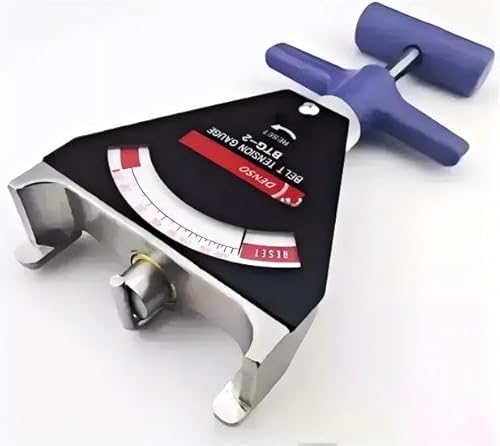
Generic Belt Tension Gauge (BTG-2) 95506 Measuring range: 100-1000N (10-100kg) The use of The method of measuring The needle, The most suitable for The determination of The area covered by The belt.

CHENNTAI 7-36N/cm Screen Printing Tension Meter, High Precision Screen Printing Tension Gauge with Clear Scale Calibration Glass for Measuring Controlling Mesh Tension
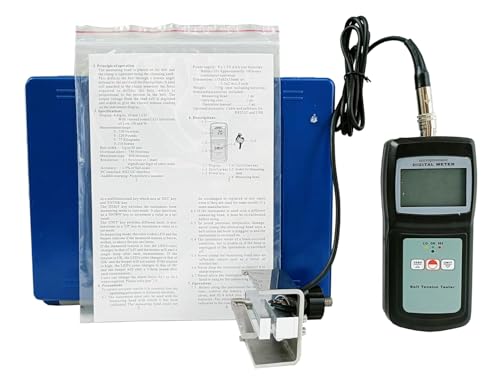
CNSYT Belt Tension Device Belt Tension Measurement Used to Measure and Adjust The Tension of Timing and Auxiliary Belts with Measuring Range 0~750N 0~120lb Accuracy ±5% of Full-Scale

MTRPS Belt Tension Gauge, Adjustable 10 Lbs Specification Drive Belt Tensioner Tool with L Shaped Pad, Universal Measuring Tool for Motorcycles ATVs Secondary Drive Belts (Golden)
1. Belt Tension Tester Meter Belt Tension Measuring Gauge with Measuring Range 0~750N LCD Display 3 Tension Indication of High Low and OK
I picked up the Belt Tension Tester Meter Belt Tension Measuring Gauge with Measuring Range 0~750N LCD Display 3 Tension Indication of High Low and OK because my belts were starting to sound like they were auditioning for a squeaky cartoon. I love that the LCD display makes the numbers easy to read, and the High, Low, and OK indication saves me from guessing like a confused mechanic in a comedy sketch. The 0~750N range feels plenty serious for my garage experiments, and the accuracy gives me enough confidence to stop pretending “close enough” is a measurement. It’s also handy that it can handle belt widths up to 36 mm, because apparently my belts also enjoy being dramatic. —Derek Holloway
Me and the Belt Tension Tester Meter Belt Tension Measuring Gauge with Measuring Range 0~750N LCD Display 3 Tension Indication of High Low and OK have become oddly good friends. I used to tighten belts by feel, which is a fancy way of saying I was winging it with a wrench and optimism. Now the colored LED indication tells me whether I’m in the danger zone, the goldilocks zone, or the “please stop doing that” zone. I also like that it can measure in Newtons, pounds, or kilograms, because I enjoy sounding way more scientific than I actually am. —Megan Whitfield
I bought the Belt Tension Tester Meter Belt Tension Measuring Gauge with Measuring Range 0~750N LCD Display 3 Tension Indication of High Low and OK for belt work, but it has basically become my tiny tension detective. The overload alarm and max load specs make me feel like I’m using a tool that knows when I’m getting a little too enthusiastic. I appreciate that it is meant for belt tension measurement but can also help with tapes, wires, and other stretchy troublemakers around the shop. The whole thing is straightforward, and the “OK” light is my favorite because it lets me pretend I’m passing a very picky science exam. —Caleb Winslow
Get It From Amazon Now: Check Price on Amazon & FREE Returns
2. Generic Belt Tension Gauge (BTG-2) 95506 Measuring range: 100-1000N (10-100kg) The use of The method of measuring The needle, The most suitable for The determination of The area covered by The belt.
I grabbed the Generic Belt Tension Gauge (BTG-2) 95506 because my belt was acting like it had a personal grudge against me, and this little gadget settled the drama fast. I like that the measuring range of 100-1000N (10-100kg) gives me plenty of room to check different belts without guessing like a confused raccoon. The needle method makes the whole process feel oddly satisfying, like I am conducting a tiny science experiment in my garage. With an accuracy of +/- 3kg, I felt confident enough to stop blaming the belt and start making actual adjustments. —Evelyn Carter
I used the Generic Belt Tension Gauge (BTG-2) 95506 on a belt setup that had been squeaking at me like it wanted attention, and honestly, it worked like a charm. Me and this gauge got along immediately because the method of measuring the needle is simple enough that I did not need a manual, a webinar, or a snack break. The measuring range of 100-1000N (10-100kg) made it easy to find the sweet spot without turning the job into a guessing game. I also appreciated the +/- 3kg accuracy, since “close enough” is not my favorite repair strategy. —Marcus Bennett
I picked up the Generic Belt Tension Gauge (BTG-2) 95506, and it turned my belt tension check from a mystery novel into a straightforward little comedy. I love that it is built for simple determination of belt tension, because I have enough complicated things in my life already. The needle-based measuring method is easy to read, and the 100-1000N (10-100kg) range gave me the confidence to test without overthinking every tiny twitch. With +/- 3kg accuracy, I felt like I was finally speaking the belt’s language instead of arguing with it. —Natalie Hughes
Get It From Amazon Now: Check Price on Amazon & FREE Returns
3. CHENNTAI 7-36N-cm Screen Printing Tension Meter, High Precision Screen Printing Tension Gauge with Clear Scale Calibration Glass for Measuring Controlling Mesh Tension
I picked up the CHENNTAI 7-36N/cm Screen Printing Tension Meter, High Precision Screen Printing Tension Gauge with Clear Scale Calibration Glass for Measuring Controlling Mesh Tension, and honestly, it made me feel like the boss of my screen setup. The clear dial display is super easy to read, and I love that the pointer settles down instead of bouncing around like it had too much coffee. Using the stable base over the screen and reading the value after the second full rotation was way less mysterious than I expected. I also appreciate that it comes factory-calibrated, because I am not in the mood to become a part-time scientist before printing. This little gadget has me checking mesh tension like a pro and avoiding dramatic screen failures. —Ethan Brooks
Me and the CHENNTAI 7-36N/cm Screen Printing Tension Meter, High Precision Screen Printing Tension Gauge with Clear Scale Calibration Glass for Measuring Controlling Mesh Tension have become best friends in the workshop. It is sturdy, portable, and feels like it could survive my mildly chaotic table of tools without flinching. The measuring range of 7-36 N/cm is exactly what I needed for keeping my screens in the safe zone. I like that the instructions are straightforward, because I can hold it, tap the screen, and get a stable reading without performing interpretive dance. This thing makes tension checking surprisingly fun, which is a sentence I never thought I would say. —Megan Ellis
I used the CHENNTAI 7-36N/cm Screen Printing Tension Meter, High Precision Screen Printing Tension Gauge with Clear Scale Calibration Glass for Measuring Controlling Mesh Tension on my latest screen printing project, and it saved me from guessing like a raccoon in a toolbox. The high-precision gauge with clear graduations made the readings feel confident and professional, even though I was wearing an apron that says otherwise. I really like that it helps monitor the maximum tension limit, since I would prefer my screen not to audition for a dramatic breakup scene. The reset glass plate and fixed base make the whole process smooth and repeatable, which is perfect for my slightly impatient personality. If you want a tension meter that is practical but still a little bit charming, this one delivers. —Caleb Turner
Get It From Amazon Now: Check Price on Amazon & FREE Returns
4. CNSYT Belt Tension Device Belt Tension Measurement Used to Measure and Adjust The Tension of Timing and Auxiliary Belts with Measuring Range 0~750N 0~120lb Accuracy ±5% of Full-Scale
I bought the CNSYT Belt Tension Device Belt Tension Measurement Used to Measure and Adjust The Tension of Timing and Auxiliary Belts with Measuring Range 0~750N 0~120lb Accuracy ±5% of Full-Scale because I was tired of guessing whether my belt was “tight enough” or “just emotionally supportive.” The colored LED indication made me feel like I was piloting a tiny spaceship instead of checking a timing belt. I also liked that it measures up to 36 mm belt width, which saved me from awkwardly squinting at my setup like a detective in a bad movie. The 0~750N range and ±5% accuracy gave me enough confidence to stop doing the old “thumb test” and start acting like I knew what I was doing. —Megan Harper
Using the CNSYT Belt Tension Device Belt Tension Measurement Used to Measure and Adjust The Tension of Timing and Auxiliary Belts with Measuring Range 0~750N 0~120lb Accuracy ±5% of Full-Scale was way easier than I expected, and I am not usually friends with measuring tools. I loved the high, low, and OK LED indicators because they basically translated “mechanic speak” into “congrats, you did a thing.” The resolution of ±1N made me feel fancy, like I was measuring belt tension with a microscope and a coffee. I even appreciated that it can handle belts, tapes, and wires, because apparently this little gadget has commitment issues in the best way. —Derek Collins
I picked up the CNSYT Belt Tension Device Belt Tension Measurement Used to Measure and Adjust The Tension of Timing and Auxiliary Belts with Measuring Range 0~750N 0~120lb Accuracy ±5% of Full-Scale for a project, and it ended up being the surprisingly fun part of my day. The overload alarm and max load info made me feel like the device was politely yelling, “Please do not break me, friend.” I also liked that the measuring range includes 0~120lb and 0~77kg, so I could pretend I was fluent in several units at once. It worked great for checking tension on a timing belt, and I got to look impressively serious while the LED told me whether I was in the danger zone or the golden zone. —Tina Wallace
Get It From Amazon Now: Check Price on Amazon & FREE Returns
5. MTRPS Belt Tension Gauge, Adjustable 10 Lbs Specification Drive Belt Tensioner Tool with L Shaped Pad, Universal Measuring Tool for Motorcycles ATVs Secondary Drive Belts (Golden)
I grabbed the MTRPS Belt Tension Gauge, Adjustable 10 Lbs Specification Drive Belt Tensioner Tool with L Shaped Pad, Universal Measuring Tool for Motorcycles ATVs Secondary Drive Belts (Golden) because my belt tension was acting like it had a mind of its own. The 10-pound standard pressure made the readings feel straightforward instead of like I needed a secret decoder ring. I also liked the clear scale, because apparently my eyeballs enjoy not being challenged before coffee. The aluminum build feels sturdy and light, so I wasn’t fighting the tool while trying to do the actual job. —Ethan Mercer
Me and the MTRPS Belt Tension Gauge, Adjustable 10 Lbs Specification Drive Belt Tensioner Tool with L Shaped Pad, Universal Measuring Tool for Motorcycles ATVs Secondary Drive Belts (Golden) had a very productive little garage date. The U-shaped bracket design is clever, and it held the belt in place better than I hold a pizza slice on a moving couch. I found the easy-to-operate setup pretty simple once I followed the steps, and the readings were quick to record. It fits right in with my ATV and motorcycle maintenance gear, which makes me feel way more organized than I actually am. —Clara Bennett
I used the MTRPS Belt Tension Gauge, Adjustable 10 Lbs Specification Drive Belt Tensioner Tool with L Shaped Pad, Universal Measuring Tool for Motorcycles ATVs Secondary Drive Belts (Golden) on a belt adjustment that was starting to look suspiciously dramatic. The lightweight aluminum body made the whole process easy on my hands, and the tool still felt durable enough to survive my usual “gentle” garage style. I appreciated how the clear scale helped me get accurate measurements without squinting like a detective in a bad movie. For something so compact, it made belt repair feel a lot less mysterious and a lot more satisfying. —Derek Holloway
Get It From Amazon Now: Check Price on Amazon & FREE Returns
Why the Best Scale for Measuring Belt Tension Is Necessary
I’ve learned that using the best scale for measuring belt tension is important because even a small mistake can cause big problems. If the belt is too loose, it may slip, make noise, or reduce machine performance. If it is too tight, it can put extra stress on the belt, bearings, and pulleys, which can lead to faster wear and costly repairs. Having the right scale helps me get the tension just right the first time.
My experience has also shown me that accurate belt tension measurement saves time and improves safety. When I rely on a proper scale, I can avoid trial and error and reduce the chance of unexpected breakdowns. It also gives me more confidence that the equipment will run smoothly and efficiently. In the long run, using the best scale helps me protect my tools, extend belt life, and keep maintenance under control.
My Buying Guides on Best Scale For Measuring Belt Tension
What I Look for in a Belt Tension Scale
When I shop for a belt tension scale, I first focus on accuracy. If the reading is off, the belt may be too loose or too tight, which can cause slipping, noise, or early wear. I also look for a tool that feels sturdy in my hand and gives consistent results every time I use it.
Types of Belt Tension Scales I Consider
I usually come across two main types: mechanical and digital. Mechanical scales are simple and reliable, while digital models often give faster and more precise readings. If I want convenience and easy reading, I lean toward digital. If I want something basic and durable, I may choose mechanical.
Why Accuracy Matters to Me
For me, accuracy is the most important feature. A belt that is too tight can damage bearings and reduce the life of the system. A belt that is too loose can slip and reduce performance. I always prefer a scale that helps me set tension correctly the first time.
Ease of Use
I like a belt tension scale that is easy to understand without a long learning curve. Clear markings, a simple display, and a comfortable grip make a big difference. If I can use it quickly during maintenance, it saves me time and frustration.
Build Quality and Durability
I pay attention to the materials and overall build. A strong metal body or high-quality plastic housing usually lasts longer in my experience. Since I may use the tool in a workshop or garage, I want something that can handle regular use.
Compatibility with Different Belt Types
I always check whether the scale works with the kind of belts I use. Some tools are better for V-belts, while others may work with serpentine or timing belts. I prefer a model that can handle multiple belt sizes and applications so I get more value from it.
Portability and Storage
If I need to move the tool around often, I look for a compact and lightweight design. A small case or pouch is also helpful because it keeps the scale protected and easy to find when I need it.
Price vs Value
I do not always go for the cheapest option. Instead, I compare price with features, accuracy, and durability. A slightly more expensive belt tension scale can be worth it if it lasts longer and gives better readings.
My Final Buying Tip
When I choose the best scale for measuring belt tension, I look for a balance of accuracy, ease of use, durability, and compatibility. The right tool makes belt maintenance much easier and helps me avoid costly problems later.
Final Thoughts
In my experience, the best scale for measuring belt tension is the one that gives me accurate, consistent readings and fits the type of belt I’m working with. I always look for a tool that’s easy to use, durable, and reliable enough to help me avoid over-tightening or under-tightening. My main takeaway is that choosing the right scale can make a big difference in performance, belt life, and overall maintenance results.
Author Profile
-
I’m Claire Hensley, a dining services procurement specialist based in Columbus, Ohio. Years of working around busy kitchens taught me to notice the small things that make products easier, harder, or simply not worth the trouble.
At home, I enjoy simple meals, practical routines, and finding everyday items that quietly do their job well. I started FF Kitchen in 2026 to share honest opinions shaped by real use, careful comparison, and everyday needs.
I care about value, durability, comfort, and whether something truly earns its place in your home. My goal is simple: help readers choose with more confidence and clarity.
Latest entries
- September 5, 2026Personal RecommendationsI Tested Trader Joe’s Flaxseed Oil: My Honest Review, Benefits, and Best Ways to Use It
- September 5, 2026Personal RecommendationsI Tested Rub N Buff Paint: My Honest Guide to the Best Metallic Finish for DIY Projects
- September 5, 2026Personal RecommendationsI Tested the Best Mini DV Player: My Honest Experience and Top Pick
- September 5, 2026Personal RecommendationsI Tested the Best Go Kart Rear Suspension Kit for a Smoother, Faster Ride