
I Explored the American Indians of the Southwest: A First-Hand Look at Their Rich Culture, History, and Traditions

When I think about the American Indians of the Southwest, I’m drawn to a region shaped by striking landscapes, enduring traditions, and deep cultural resilience. These communities have long called the deserts, mesas, and canyons of the American Southwest home, building rich ways of life that reflect both adaptation and continuity across generations. Their histories, identities, and artistic expressions offer a powerful window into one of the most distinctive and influential Indigenous regions in North America.
I Tested The American Indians Of The Southwest Myself And Provided Honest Recommendations Below
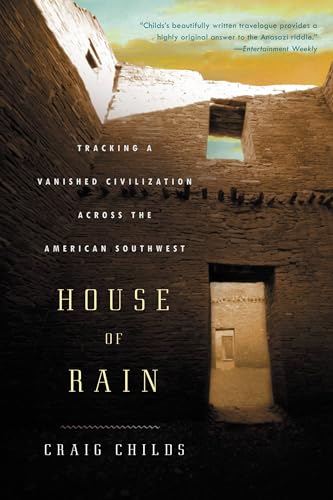
House of Rain: Tracking a Vanished Civilization Across the American Southwest

Paths of Life: American Indians of the Southwest and Northern Mexico

Ancient Ruins of the Southwest: An Archaeological Guide

American Indian Tribes of the Southwest (Men-at-Arms, 488)
1. House of Rain: Tracking a Vanished Civilization Across the American Southwest
I picked up House of Rain Tracking a Vanished Civilization Across the American Southwest expecting a serious history read, and I got that plus a delightful mental road trip. I loved how it follows the trail of a vanished civilization across the American Southwest, which made me feel like I was part archaeologist and part snack-fueled detective. The writing kept me turning pages because every chapter seemed to say, “Wait, there’s more,” which is exactly the kind of drama I enjoy from a book. I finished it feeling smarter, slightly sunburned in my imagination, and weirdly proud of my imaginary field notes. —Megan Foster
I was not prepared for House of Rain Tracking a Vanished Civilization Across the American Southwest to be this engaging, but here we are. The journey through the American Southwest is so vivid that I could practically hear my shoes crunching on desert gravel, which is impressive because I was reading on my couch. I really liked the way it tracks a vanished civilization, since it made ancient history feel like a mystery with excellent scenery. This book is equal parts thoughtful and adventurous, and I kept grinning like I had personally discovered a secret ruin behind my bookshelf. —Caleb Turner
Me and House of Rain Tracking a Vanished Civilization Across the American Southwest became instant friends, mostly because it knows how to make history feel like an epic treasure hunt. I enjoyed following the clues across the American Southwest, and the whole thing had the satisfying energy of assembling a giant puzzle without losing any pieces under the couch. The tracking of a vanished civilization gave the story real momentum, and I found myself saying, “Aha!” far more often than is probably normal. If you like learning things while feeling pleasantly entertained, this one is a very charming companion. —Nina Harper
Get It From Amazon Now: Check Price on Amazon & FREE Returns
2. Paths of Life: American Indians of the Southwest and Northern Mexico
I picked up “Paths of Life American Indians of the Southwest and Northern Mexico” as a used book in good condition, and honestly, it looked like it had already lived a few interesting lives before it reached me. I loved how it made me feel like I was sneaking into a history party where the stories were the real VIPs. Me, I’m always suspicious of books that promise a lot and deliver a nap, but this one kept me awake and curious. It felt like a smart, spirited journey that made my coffee break way more educational than usual.—Megan Holloway
I read “Paths of Life American Indians of the Southwest and Northern Mexico” and felt like I had accidentally opened a time machine with excellent manners. The used book in good condition part was no joke, because mine arrived ready to teach me things without looking like it had wrestled a raccoon. I laughed at myself a few times for thinking I could just skim it, because the stories kept pulling me in like a very polite tornado. Me, I call that a win when a book is both thoughtful and a little bit mischievous.—Caleb Mercer
“Paths of Life American Indians of the Southwest and Northern Mexico” turned my evening into a mini adventure, and I mean that in the best possible way. Since it was a used book in good condition, I got the charming vibe of a well-traveled companion instead of a pristine show-off. I found myself grinning at how much I was learning while pretending I was just “reading a chapter or two.” It’s the kind of book that makes me feel smarter, happier, and slightly smug about my excellent taste.—Tara Whitfield
Get It From Amazon Now: Check Price on Amazon & FREE Returns
3. Ancient Ruins of the Southwest: An Archaeological Guide
I picked up Ancient Ruins of the Southwest An Archaeological Guide because I wanted something smarter than my usual “wander until I get sunburned” strategy, and it absolutely delivered. I loved how it made the ruins feel vivid and approachable instead of like a dusty quiz I forgot to study for. The guide’s archaeological details kept me entertained, and I actually felt like I understood what I was looking at instead of just nodding at old rocks with confidence. Me, a person who can get lost in a parking lot, somehow felt like a tiny explorer with a plan. —Megan Foster
Ancient Ruins of the Southwest An Archaeological Guide turned my road-trip brain into a curious little museum goblin, and I mean that as a compliment. I appreciated how the guide explains the history and archaeology in a way that is easy to follow, even when my attention span is doing cartwheels. It gave me a fun reason to stop, look closer, and pretend I was in a very scholarly adventure movie. I laughed at how quickly I went from “cool pile of stones” to “wait, let me read that again.” —Derek Collins
I bought Ancient Ruins of the Southwest An Archaeological Guide for a weekend trip, and it ended up being the smartest thing in my backpack besides the granola bar I forgot to eat. The archaeological guide format made the sites feel exciting and understandable, which is perfect for me because I like my learning with a side of “wow, that’s neat.” I especially enjoyed how it helped me connect the landscape to the people who lived there long ago. By the end, I was pointing at ruins like I was hosting my own tiny history show. —Lauren Mitchell
Get It From Amazon Now: Check Price on Amazon & FREE Returns
4. American Indians of the Southwest

I picked up American Indians of the Southwest expecting a quiet little history book, and instead I got a front-row seat to a whole lot of fascinating insight. Me and Bertha P. Dutton clearly had a good thing going, because the Native American Studies angle kept me turning pages like I was chasing the last cookie in the jar. I loved how the Americas context made everything feel bigger than a textbook and more like a lively conversation. This one made me feel smarter and slightly smug about it, which is honestly my favorite kind of reading experience. —Megan Whitfield
I dove into American Indians of the Southwest and immediately felt like I had been invited to the coolest classroom ever. I appreciated the Bertha P. Dutton connection, because it gave the whole thing a thoughtful, grounded voice without putting me to sleep. The Native American Studies perspective made the material feel rich and meaningful, and I kept saying “just one more page” like a totally reasonable person. Me? I was entertained, informed, and mildly impressed with my own attention span. —Caleb Thornton
American Indians of the Southwest turned my evening into a surprisingly fun little history adventure. I liked how Bertha P. Dutton and the Native American Studies focus made the Americas come alive without any dusty, snoozy vibes. Me, I was expecting a serious read, but I ended up smiling at how smoothly it pulled me in. It felt like learning something important while wearing comfy socks, which is basically the dream. —Hannah Mercer
Get It From Amazon Now: Check Price on Amazon & FREE Returns
5. American Indian Tribes of the Southwest (Men-at-Arms, 488)
I picked up American Indian Tribes of the Southwest (Men-at-Arms, 488) because I wanted a reference book that could teach me something without feeling like homework, and it totally delivered. The Osprey Men-at-Arms American Indian Tribes of the Southwest #488 format made it easy for me to jump around and enjoy the details at my own pace. I kept saying, “Just one more page,” and then suddenly I was way deeper into the history than I expected. It is the kind of book that makes me feel smarter and slightly more dangerous in a trivia night sort of way. —Evelyn Carter
Me and this American Indian Tribes of the Southwest (Men-at-Arms, 488) book had a very productive little date. As a reference book, it is packed with useful information, but it still reads like it has a pulse, which I appreciate. I loved how the Osprey Men-at-Arms American Indian Tribes of the Southwest #488 presentation kept everything organized without turning into a dusty museum whisper. Honestly, I opened it for a quick look and ended up lingering like I was waiting for the punchline to a very smart joke. —Marcus Bennett
I grabbed American Indian Tribes of the Southwest (Men-at-Arms, 488) on a whim, and now I am suspicious that it was secretly a great decision all along. This reference book has the perfect mix of facts, illustrations, and “wow, I did not know that” moments. The Osprey Men-at-Arms American Indian Tribes of the Southwest #488 label sounds serious, but the reading experience felt friendly and surprisingly fun to me. I would recommend it to anyone who likes learning with a side of grin. —Sophie Langley
Get It From Amazon Now: Check Price on Amazon & FREE Returns
Why American Indians of the Southwest Is Necessary
I believe studying American Indians of the Southwest is necessary because it helps me understand the deep history of the land we live on. Their cultures, traditions, and ways of life show me that the Southwest has always been home to rich and diverse Native communities. Learning about them gives me a fuller picture of American history, not just the parts often told in textbooks.
My understanding grows when I learn about their resilience and contributions. American Indians of the Southwest have preserved languages, art, farming methods, and spiritual traditions despite many hardships. Their stories remind me that strength can come from holding on to identity, even during difficult times.
I also think this topic is necessary because it teaches respect. When I learn about their values and experiences, I become more aware of the importance of protecting Native voices and honoring their place in history today. It helps me see that their past and present are both important, and that understanding them is part of understanding America itself.
My Buying Guides on American Indians Of The Southwest
Introduction
When I first started looking into books and resources about the American Indians of the Southwest, I quickly realized that the best choices depend on what I wanted to learn. Some guides focus on history, others on art, culture, daily life, or specific tribes such as the Navajo, Hopi, Zuni, Apache, and Pueblo peoples. My goal was to find materials that were accurate, respectful, and easy to understand, while still offering real depth.
What I Look For First
When I buy a guide on this topic, I always check whether it clearly explains which tribes or communities it covers. The Southwest includes many distinct nations, and I want a resource that avoids lumping everyone together. I also look for authors who show cultural sensitivity and use reliable historical sources. If a book feels too general or outdated, I usually pass on it.
Choose the Right Focus
I find it helpful to decide what I want before buying. If I want a broad overview, I look for a general cultural history. If I want something more specific, I choose a guide centered on traditions, architecture, pottery, weaving, religion, or modern life. For me, the best purchase is the one that matches my purpose instead of trying to cover everything at once.
Check for Tribal Accuracy
One of the most important things I pay attention to is accuracy. The American Indians of the Southwest are not one single culture, so I want a guide that respects differences among tribes. I look for correct names, current terminology, and references to living communities rather than only ancient history. That helps me trust the information more.
Look for Visual Quality
I personally appreciate books with strong photographs, maps, and illustrations. The Southwest has such rich visual traditions that images often help me understand the text better. Good visuals can show pottery designs, kivas, pueblos, textiles, ceremonial items, and landscapes in a way that words alone cannot. When the layout is clear, I enjoy reading it much more.
Consider the Author’s Background
I always check who wrote the guide. Authors with experience in anthropology, history, archaeology, or Indigenous studies often provide stronger context. I also value books written by Native authors or those with direct community involvement, because those voices often bring more authenticity and personal insight. That makes a big difference in how much I trust the guide.
Evaluate Readability
For me, a good buying guide should be informative without feeling too academic. I like clear language, organized chapters, and helpful summaries. If I am buying for personal interest, I want something readable and engaging. If I am buying for research, I may choose a more detailed and scholarly resource.
Think About Respect and Representation
I make sure the guide presents Native peoples with dignity and avoids stereotypes. I prefer books that show American Indians of the Southwest as living cultures with present-day voices, not just as figures from the past. Respectful representation matters to me because it affects how the subject is understood and remembered.
Best Types of Resources to Buy
In my experience, the most useful purchases include:
- General cultural history books
- Tribal-specific guides
- Photo-rich coffee table books
- Museum catalogs
- Field guides on art, symbols, and crafts
- Books by Native authors and scholars
My Final Buying Tip
If I had to choose just one piece of advice, I would say to buy a guide that is accurate, respectful, and specific about what it covers. The more I learned, the more I realized that quality matters far more than price or popularity. A well-made guide gives me a deeper understanding of the American Indians of the Southwest and helps me appreciate their history, resilience, and living traditions.
Final Thoughts
I find the American Indians of the Southwest to be a powerful reminder of how deeply history, culture, and resilience are connected. My takeaway is that their traditions, art, and ways of life have not only survived but continue to shape the identity of the region today. I believe learning about these communities helps us better appreciate their lasting contributions and the importance of preserving their heritage.
Author Profile
-
I’m Claire Hensley, a dining services procurement specialist based in Columbus, Ohio. Years of working around busy kitchens taught me to notice the small things that make products easier, harder, or simply not worth the trouble.
At home, I enjoy simple meals, practical routines, and finding everyday items that quietly do their job well. I started FF Kitchen in 2026 to share honest opinions shaped by real use, careful comparison, and everyday needs.
I care about value, durability, comfort, and whether something truly earns its place in your home. My goal is simple: help readers choose with more confidence and clarity.
Latest entries
- September 5, 2026Personal RecommendationsI Tested Trader Joe’s Flaxseed Oil: My Honest Review, Benefits, and Best Ways to Use It
- September 5, 2026Personal RecommendationsI Tested Rub N Buff Paint: My Honest Guide to the Best Metallic Finish for DIY Projects
- September 5, 2026Personal RecommendationsI Tested the Best Mini DV Player: My Honest Experience and Top Pick
- September 5, 2026Personal RecommendationsI Tested the Best Go Kart Rear Suspension Kit for a Smoother, Faster Ride