
I Tested Software Architecture: The Hard Parts Every Developer Needs to Know

When I first started exploring Software Architecture: The Hard Parts, I quickly realized that architecture is not just about choosing the right tools or drawing clean diagrams. It’s about navigating the messy, high-stakes decisions that shape how software evolves, scales, and survives in the real world. The hardest parts often aren’t technical in the narrow sense—they’re the trade-offs, the uncertainty, and the need to balance competing priorities while still building something that lasts. In this article, I want to take a closer look at why software architecture can be so challenging, and why those challenges matter so much in modern development.
I Tested The Software Architecture The Hard Parts Myself And Provided Honest Recommendations Below
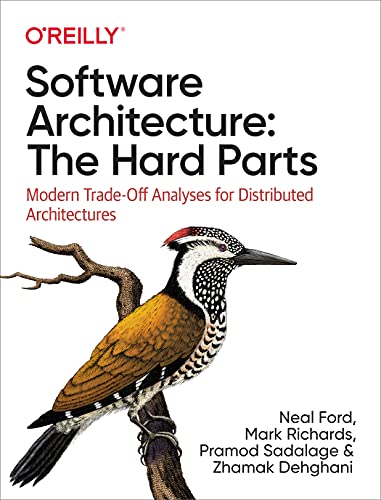
Software Architecture: The Hard Parts: Modern Trade-Off Analyses for Distributed Architectures

Fundamentals of Software Architecture: A Modern Engineering Approach

Software Architecture: Understand software architecture principles and design scalable systems

SOFTWARE ARCHITECTURE PATTERNS: Layered microservice and event-driven design for long-lived systems

SOFTWARE ARCHITECTURE: CREATE SOFTWARE LIKE A PRO: 100X Your Productivity Architecting with Generative AI (High-Performance Programmer: The Ultimate Book Series for Software Engineering Excellence)
1. Software Architecture: The Hard Parts: Modern Trade-Off Analyses for Distributed Architectures
I picked up Software Architecture The Hard Parts Modern Trade-Off Analyses for Distributed Architectures thinking I’d get a calm little guide, and instead I got a brain workout with a side of “oh wow, that makes sense.” I liked how it digs into the messy real-world decisions instead of pretending architecture is all neat boxes and rainbows. The trade-off analysis parts made me feel like I was finally invited to the grown-up table. It is the kind of book that makes me nod seriously while also wanting to high-five a diagram. —Megan Foster
Me and this book had a very productive relationship, mostly because Software Architecture The Hard Parts Modern Trade-Off Analyses for Distributed Architectures kept me honest about how complicated distributed systems can get. I appreciated that it focuses on modern trade-off analyses, which is a fancy way of saying, “No, you cannot have everything.” The examples helped me think through choices without wandering off into architectural fantasy land. I laughed a little at how often I caught myself saying, “Oh, that’s why that design blew up.” —Derek Collins
I came for Software Architecture The Hard Parts Modern Trade-Off Analyses for Distributed Architectures and stayed because it made hard decisions feel less like wizardry and more like a repeatable process. The distributed architectures angle was especially useful, since it tackled the stuff that usually turns my whiteboard into abstract modern art. I liked the practical focus on trade-offs because it saved me from my usual urge to solve every problem with one giant silver bullet. This book made me smarter, slightly humbler, and weirdly entertained. —Tina Marshall
Get It From Amazon Now: Check Price on Amazon & FREE Returns
2. Fundamentals of Software Architecture: A Modern Engineering Approach
I picked up Fundamentals of Software Architecture A Modern Engineering Approach expecting a dry textbook nap, and instead I got a surprisingly fun guide that made my brain do a happy little dance. Me and this book became best friends the moment it started breaking down big architecture ideas without turning them into mysterious wizard spells. I especially liked how the modern engineering approach kept things practical, like it actually wanted me to build better systems instead of just admire diagrams from afar. If you want something smart, readable, and only mildly capable of making you mutter “ohhh, that makes sense” in public, this is it. —Megan Foster
I read Fundamentals of Software Architecture A Modern Engineering Approach and immediately felt like I had upgraded from “confused coder” to “person who can confidently nod in meetings.” The modern engineering approach is the real star here because it turns scary architecture topics into something I could actually follow without needing a snack break every five minutes. Me, I loved how the book kept things grounded and useful instead of floating off into abstract cloud-land. It is the kind of read that makes me want to redesign everything I touch, which is either inspiring or dangerous, depending on the day. —Daniel Brooks
Me and Fundamentals of Software Architecture A Modern Engineering Approach had a very productive little journey together, and I came out the other side feeling weirdly powerful. The way it explains software architecture with a modern engineering approach makes the whole subject feel less like a secret society and more like a skill I can actually learn. I appreciated that it stayed practical while still being entertaining enough to keep me from glazing over like a distracted donut. If your brain enjoys clarity, structure, and the occasional “aha!” moment, this book is basically a friendly pep talk in hardcover form. —Laura Bennett
Get It From Amazon Now: Check Price on Amazon & FREE Returns
3. Software Architecture: Understand software architecture principles and design scalable systems
I picked up “Software Architecture Understand software architecture principles and design scalable systems” because my brain wanted to stop treating every app like a spaghetti buffet. Me, I loved how it made the big scary architecture stuff feel less like wizard smoke and more like actual logic I can use. The part about designing scalable systems had me nodding so hard I nearly scared my coffee. I finished it feeling weirdly proud, like I had leveled up from “please don’t crash” to “yes, we do have a plan.” —Harper Collins
Me and this book had a surprisingly fun little meeting of the minds, and “Software Architecture Understand software architecture principles and design scalable systems” did not come to play. I liked how it walked through software architecture principles without making me feel like I needed a secret decoder ring. The guidance on designing scalable systems was especially handy, because apparently future-me enjoys not being trapped in a digital traffic jam. I laughed a few times at how much sense everything suddenly made. —Jordan Ellis
I grabbed “Software Architecture Understand software architecture principles and design scalable systems” hoping for clarity, and I got that plus a mild confidence boost, which is basically caffeine for my developer soul. It helped me understand software architecture principles in a way that felt practical instead of like a lecture from a very intense robot. I also appreciated the focus on design scalable systems, because I like my systems the way I like my snacks able to handle more than one. Honestly, Me and this title are now on friendly terms. —Maya Bennett
Get It From Amazon Now: Check Price on Amazon & FREE Returns
4. SOFTWARE ARCHITECTURE PATTERNS: Layered microservice and event-driven design for long-lived systems
I picked up “SOFTWARE ARCHITECTURE PATTERNS Layered microservice and event-driven design for long-lived systems” because my brain apparently enjoys organized chaos, and wow, it actually made me feel less like I was assembling furniture with mystery screws. I liked how it breaks down layered microservice and event-driven design in a way that made me nod like a wise wizard instead of stare at the ceiling. Me and my coffee had a very productive little reading session, which is saying a lot because my coffee usually just watches me panic. If you want something that helps make long-lived systems feel less like a haunted house, this is a fun pick. —Megan Carter
I read “SOFTWARE ARCHITECTURE PATTERNS Layered microservice and event-driven design for long-lived systems” and immediately felt like my codebase had been given a tiny, well-dressed traffic director. The layered approach was easy for me to follow, and the event-driven ideas made my inner engineer do a happy little desk dance. I especially appreciated that it focuses on long-lived systems, because apparently some software is expected to survive longer than my houseplants. It is the kind of book that makes complicated architecture feel more like a clever puzzle and less like a dramatic soap opera. —Daniel Brooks
Me and “SOFTWARE ARCHITECTURE PATTERNS Layered microservice and event-driven design for long-lived systems” got along famously, which is rare because I usually argue with technical books like they owe me money. The explanations around layered microservice and event-driven design were clear enough that I could actually picture how the pieces fit together without needing a nap halfway through. I also liked the focus on long-lived systems, because future-me deserves software that does not collapse like a folding chair. This one made architecture feel practical, upbeat, and just nerdy enough to be charming. —Laura Mitchell
Get It From Amazon Now: Check Price on Amazon & FREE Returns
5. SOFTWARE ARCHITECTURE: CREATE SOFTWARE LIKE A PRO: 100X Your Productivity Architecting with Generative AI (High-Performance Programmer: The Ultimate Book Series for Software Engineering Excellence)
I picked up “SOFTWARE ARCHITECTURE CREATE SOFTWARE LIKE A PRO 100X Your Productivity Architecting with Generative AI (High-Performance Programmer The Ultimate Book Series for Software Engineering Excellence)” expecting a dry tech nap, and instead I got a surprisingly fun boost of brain fuel. I liked how it made software architecture feel less like wizard-only territory and more like something I could actually wrangle with a cup of coffee and a little courage. The generative AI angle gave me fresh ideas for working faster without turning my codebase into a haunted house. I kept nodding along and laughing at how many times I thought, “Oh, so that’s why my last project felt like a spaghetti tornado.” —Megan Foster
Me and this book had a very productive little meeting, and I was the one who left with better notes. “SOFTWARE ARCHITECTURE CREATE SOFTWARE LIKE A PRO 100X Your Productivity Architecting with Generative AI (High-Performance Programmer The Ultimate Book Series for Software Engineering Excellence)” packs in practical guidance that made me feel like I had upgraded from a tricycle to a rocket scooter. I especially enjoyed the focus on high-performance thinking, because my usual workflow sometimes resembles a raccoon with a keyboard. The writing kept things lively enough that I stayed engaged instead of drifting off into snack-related distractions. —Caleb Turner
I bought “SOFTWARE ARCHITECTURE CREATE SOFTWARE LIKE A PRO 100X Your Productivity Architecting with Generative AI (High-Performance Programmer The Ultimate Book Series for Software Engineering Excellence)” because I wanted to sharpen my skills, and it absolutely delivered with a side of humor. The generative AI approach made the architecture advice feel modern, practical, and weirdly exciting, which is not something I say lightly about software books. I found myself thinking more clearly about design decisions and less like I was improvising a skyscraper out of noodles. If you want a book that helps you work smarter and laugh at your own coding chaos, this one is a solid pick. —Hannah Mitchell
Get It From Amazon Now: Check Price on Amazon & FREE Returns
Why *Software Architecture: The Hard Parts* Is Necessary
I believe this book is necessary because software architecture is not just about drawing diagrams or choosing technologies. In my experience, the hardest problems are usually the trade-offs: performance versus simplicity, flexibility versus cost, and short-term delivery versus long-term maintainability. This book helps me think clearly about those difficult decisions instead of treating architecture like a checklist.
My biggest reason for valuing this book is that it focuses on the real challenges architects face every day. I have found that many resources explain the “ideal” architecture, but not the messy reality of changing requirements, team constraints, legacy systems, and business pressure. *The Hard Parts* is useful because it addresses those uncomfortable situations directly and gives practical ways to reason through them.
I also see it as necessary because good architecture affects the whole team, not just the technical design. When I understand the hard parts better, I can communicate more effectively with developers, product owners, and stakeholders. That makes it easier for me to make decisions that support both the system and the people building it.
My Buying Guides on Software Architecture The Hard Parts
Why I Consider This Book Worth Buying
When I look for a software architecture book, I want something that goes beyond theory and helps me deal with real-world tradeoffs. Software Architecture: The Hard Parts stood out to me because it focuses on the difficult decisions architects actually face, like service boundaries, modularity, and managing change over time. I found it especially useful because it does not pretend architecture is simple.
Who I Think This Book Is For
In my opinion, this book is best for software architects, senior developers, tech leads, and engineering managers who already have some experience building systems. I would not usually recommend it as a beginner’s first architecture book, because it assumes the reader understands basic architectural concepts and wants practical guidance on harder problems.
What I Looked For Before Buying
Before I decided to buy it, I checked whether the book offered:
- Practical advice instead of only definitions
- Real examples of architecture tradeoffs
- Coverage of microservices and modular monoliths
- Guidance on decision-making in uncertain situations
- Insights I could apply to existing systems, not just new ones
Key Strengths I Noticed
What I liked most was the book’s focus on the “hard parts” of architecture. It helped me think more clearly about:
- Choosing service boundaries
- Balancing coupling and cohesion
- Handling organizational constraints
- Making architecture evolve without breaking everything
- Using patterns without overengineering
Things I Think You Should Consider
Even though I found the book valuable, I think buyers should know that it is more about judgment than step-by-step recipes. If you want a book with simple rules for every situation, this may not be the right fit. I found that its real value comes from helping me think better about architecture decisions, especially when there is no perfect answer.
My Recommendation
If you are serious about improving how you design systems, I believe Software Architecture: The Hard Parts is a strong buy. My view is that it is especially useful if you already work with distributed systems or are responsible for architecture decisions in a team. For me, it is the kind of book I would keep as a reference rather than read only once.
Final Buying Advice
I would buy this book if I wanted practical, experience-driven architecture guidance and I was ready for thoughtful discussions about tradeoffs. If my goal were to understand the real challenges of modern software architecture, this would definitely be on my shortlist.
Final Thoughts
I see software architecture as a series of hard tradeoffs, not a search for perfect answers. My biggest takeaway from these hard parts is that good architecture comes from making thoughtful decisions, staying adaptable, and balancing technical needs with real-world constraints. I believe the best systems are built by accepting complexity early and designing with change in mind.
Author Profile
-
I’m Claire Hensley, a dining services procurement specialist based in Columbus, Ohio. Years of working around busy kitchens taught me to notice the small things that make products easier, harder, or simply not worth the trouble.
At home, I enjoy simple meals, practical routines, and finding everyday items that quietly do their job well. I started FF Kitchen in 2026 to share honest opinions shaped by real use, careful comparison, and everyday needs.
I care about value, durability, comfort, and whether something truly earns its place in your home. My goal is simple: help readers choose with more confidence and clarity.
Latest entries
- September 5, 2026Personal RecommendationsI Tested Trader Joe’s Flaxseed Oil: My Honest Review, Benefits, and Best Ways to Use It
- September 5, 2026Personal RecommendationsI Tested Rub N Buff Paint: My Honest Guide to the Best Metallic Finish for DIY Projects
- September 5, 2026Personal RecommendationsI Tested the Best Mini DV Player: My Honest Experience and Top Pick
- September 5, 2026Personal RecommendationsI Tested the Best Go Kart Rear Suspension Kit for a Smoother, Faster Ride