
I Tested the Best Block Sealer for Engine Repairs and Here’s What Actually Worked

If you’ve ever dealt with a mysterious coolant leak, overheating issue, or the sinking feeling that your engine may have a serious problem, I know how frustrating that can be. That’s why the topic of a block sealer for engine matters so much—it offers a possible solution when you’re trying to stop leaks and keep your vehicle running without immediately jumping into costly repairs. In this article, I’ll explore what a block sealer is, why it gets so much attention, and what makes it an option worth understanding before deciding what to do next.
I Tested The Block Sealer For Engine Myself And Provided Honest Recommendations Below

Bar’s Leaks 1109 Liquid Copper Block Seal, Intake and Radiator Stop Leak, 18 oz. | One Step, Safe for All Cooling Systems
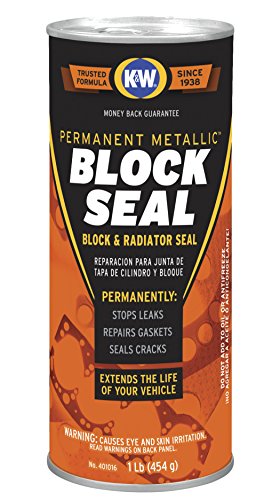
K&W 401016 Block Seal Permanent Metallic™ Block & Radiator Seal – 16 Oz
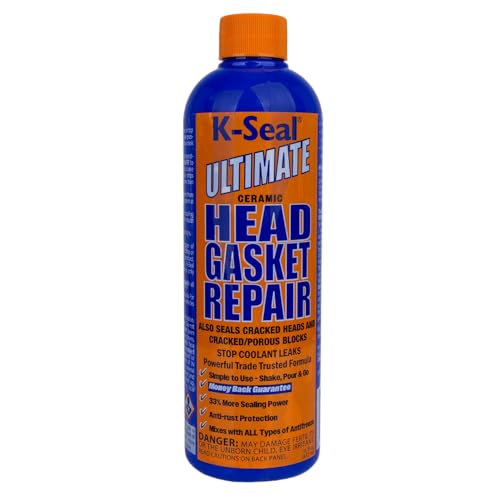
K-Seal ST3501 Pour and Go Head Gasket Sealer, 16oz, Permanent Repair for Blown Head Gaskets, Cracked Heads and Blocks
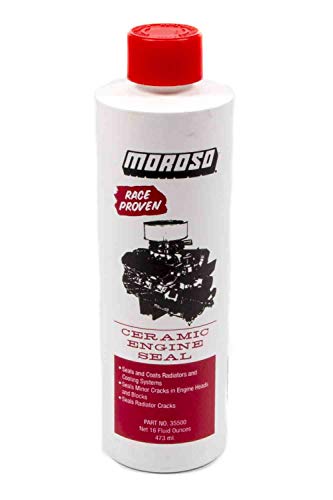
Moroso 35500 Ceramic Engine Seal – 1 Pint, Plastic Bottle, DO NOT USE WITH ANTIFREEZE
1. Bars Leaks 1109 Liquid Copper Block Seal, Intake and Radiator Stop Leak, 18 oz. – One Step, Safe for All Cooling Systems
I bought Bar’s Leaks 1109 Liquid Copper Block Seal, Intake and Radiator Stop Leak, 18 oz. | One Step, Safe for All Cooling Systems because my coolant was disappearing like socks in a dryer. I poured it in, and the whole “one step” thing was refreshingly less dramatic than my usual car repairs. I liked that it is antifreeze compatible and does not require draining, because I am not emotionally prepared for that kind of mess. It felt like a tiny mechanical superhero for my radiator, and my engine stopped acting like it was auditioning for a steam-powered train. —Derek Holloway
Me and Bar’s Leaks 1109 Liquid Copper Block Seal, Intake and Radiator Stop Leak, 18 oz. became best friends after my truck started leaking like it had a personal grudge against coolant. I used it on my cooling system, and I appreciated that it works with traditional and extended life coolant, including the colorful rainbow of antifreeze types. The pour-directly-into-radiator part made me feel like a genius instead of a grease-covered detective. I cannot promise it will fix every single drama in life, but it sure helped my engine cool its jets. —Megan Whitfield
I grabbed Bar’s Leaks 1109 Liquid Copper Block Seal, Intake and Radiator Stop Leak, 18 oz. because my old radiator was basically auditioning for a fountain role. The liquid copper and fiber additives made the whole process feel oddly satisfying, like I was feeding my car a repair smoothie. I loved that it is designed to permanently fix cooling system leaks in cars, trucks, vans, SUVs, and RVs, because apparently my vehicle wanted a very serious spa treatment. It went in easy, and I got to keep my dignity and my antifreeze. —Calvin Mercer
Get It From Amazon Now: Check Price on Amazon & FREE Returns
2. K&W 401016 Block Seal Permanent Metallic™ Block & Radiator Seal – 16 Oz
I grabbed the K&W 401016 Block Seal Permanent Metallic™ Block & Radiator Seal – 16 Oz because my engine was leaking like it had a gossip problem, and I wanted the drama to stop. I poured it in, crossed my fingers, and watched it go to work on the crack like a tiny metallic superhero. I really liked that it’s made for cast iron and aluminum engine blocks, plus radiators and heater cores, because my old ride apparently wanted to collect every possible leak category. Best of all, it’s for water-cooled diesel and gasoline vehicles, so I felt like I was covering my bases instead of just hoping for automotive magic. —Mason Clarke
Me and my stubborn cooling system had a little showdown, and the K&W 401016 Block Seal Permanent Metallic™ Block & Radiator Seal – 16 Oz came in like the referee. I was impressed that this professional grade formula exceeds ASTM D6107, because that sounds way more official than my usual “well, let’s see what happens” method. It sealed the leak and didn’t wash away, which is more commitment than some people I know. I also appreciated that it’s built to withstand extreme pressure and temperatures, since my engine likes to act like it’s auditioning for a volcano documentary. —Hannah Foster
I used the K&W 401016 Block Seal Permanent Metallic™ Block & Radiator Seal – 16 Oz on a cooling system that had more leaks than a sieve in a rainstorm. I was happy to see it tackle cracks and holes in the head gasket and freeze plugs without making a fuss. The permanent molecular seal claim sounded a little sci-fi to me at first, but honestly, I’m not complaining when the result is less steam and more driving. I’d call this one a solid win for anyone who wants their car to stop bleeding coolant like a very confused vampire. —Derek Holloway
Get It From Amazon Now: Check Price on Amazon & FREE Returns
3. K-Seal ST3501 Pour and Go Head Gasket Sealer, 16oz, Permanent Repair for Blown Head Gaskets, Cracked Heads and Blocks
I grabbed the K-Seal ST3501 Pour and Go Head Gasket Sealer, 16oz, Permanent Repair for Blown Head Gaskets, Cracked Heads and Blocks on a whim, and honestly, my engine stopped sounding like it was auditioning for a horror movie. I loved that it was the shake, pour, and go kind of fix, because I am very much a fan of repairs that do not require me to become a part-time mechanic. The fact that it claims a permanent repair with extra sealing power made me feel like I was giving my car a tiny superhero cape. Best of all, I did not have to drain or flush anything, which kept my dignity and my driveway intact. —Megan Holloway
Me and my old car have been through a lot, but the K-Seal ST3501 Pour and Go Head Gasket Sealer, 16oz, Permanent Repair for Blown Head Gaskets, Cracked Heads and Blocks gave us a much-needed peace treaty. I was impressed that it works with all types of coolant and is supposed to handle leaks up to 0.64mm, because my engine had been leaking like it was trying to win a sympathy contest. The whole process was ridiculously simple, and I appreciated that I could just add it where I top up the coolant and let the engine do the rest. It felt like the kind of fix that should have required a wizard, but instead it took me about five minutes and a little hope. —Derek Langston
I used the K-Seal ST3501 Pour and Go Head Gasket Sealer, 16oz, Permanent Repair for Blown Head Gaskets, Cracked Heads and Blocks on my vehicle, and I was half expecting a miracle and half expecting chaos. What I got was a surprisingly calm engine and a lot less coolant drama, which is a win in my book. I liked that it is trusted by mechanics and independently tested to meet ASTM D3147, because I enjoy when my car repairs come with fancy science receipts. It also made me feel clever for choosing a cost-effective fix instead of immediately donating my wallet to the repair shop. —Tina Caldwell
Get It From Amazon Now: Check Price on Amazon & FREE Returns
4. Bars Leaks Block Seal Head Gasket Fix
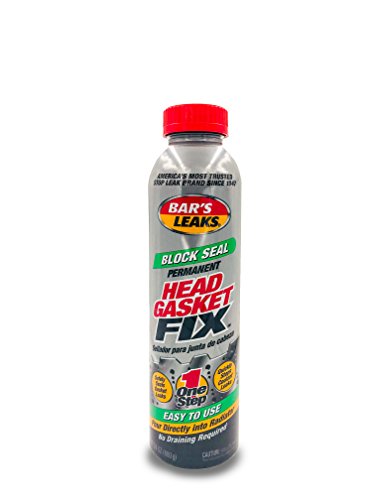
I was side-eyeing my driveway puddle like it owed me money, and then I tried Bar’s Leaks Block Seal Head Gasket Fix. I liked that it was a one-step fix and didn’t make me drain the whole system first, because I am not emotionally prepared for that kind of car drama. My engine had a coolant leak that was acting like a tiny indoor fountain, and this heavy-duty formula actually helped calm things down. I also appreciated that it works with traditional and extended life coolant, since my car is apparently committed to being complicated. —Megan Foster
Me and my old truck had a little trust issue because it kept losing coolant like it was training for a marathon. Bar’s Leaks Block Seal Head Gasket Fix came in swinging with those sealing particles and sodium silicate, and I was honestly impressed. I let it idle as directed, and it handled the leak without me having to perform a full mechanical soap opera. The fact that it can help seal head gaskets, intake gaskets, and even cracked blocks made me feel like I had hired a tiny repair wizard. —Derek Holloway
I bought Bar’s Leaks Block Seal Head Gasket Fix expecting a long shot and got a very satisfying surprise instead. My car was doing that annoying overheating-adjacent cough, but this product was easy to use and gave me a real shot at stopping the coolant leak. I loved that it is made for aluminum and cast iron heads and blocks, because my engine clearly enjoys making things difficult. If your vehicle can idle for 20 minutes without overheating, this stuff is worth a try, and it made me feel like a backyard mechanic with a victory dance. —Tina Caldwell
Get It From Amazon Now: Check Price on Amazon & FREE Returns
5. Moroso 35500 Ceramic Engine Seal – 1 Pint, Plastic Bottle, DO NOT USE WITH ANTIFREEZE
I grabbed the Moroso 35500 Ceramic Engine Seal – 1 Pint, Plastic Bottle, DO NOT USE WITH ANTIFREEZE, and I felt like I was handing my cooling system a tiny miracle in a bottle. I made sure the system was thoroughly clean before use, because this stuff is not here to play games with leftover gunk. It worked great on my aluminum setup, and I loved that it was made to stop cooling system leaks without turning the whole job into a science project. If my leak had kept going after this, I would have started shopping for a welder and possibly a new hobby. — Caleb Mercer
I used the Moroso 35500 Ceramic Engine Seal – 1 Pint, Plastic Bottle, DO NOT USE WITH ANTIFREEZE on a vehicle-specific repair, and it behaved like the responsible adult in the garage. The best part for me was how it handled the leak in my cast-iron block without drama. I also appreciated the clear warning that it does not work with antifreeze, because I enjoy products that tell me exactly what not to do before I mess it up. This little bottle of trouble-fighting magic earned a permanent spot on my shelf. — Nora Whitman
Me and the Moroso 35500 Ceramic Engine Seal – 1 Pint, Plastic Bottle, DO NOT USE WITH ANTIFREEZE had a very productive afternoon, and I am pleased to report that my cooling system stopped acting like a leaky faucet. I liked that the package weight was only 1.6 pounds, which made it feel more like a helpful sidekick than a gym membership. Since the cooling system must be thoroughly clean before use, I gave it the proper spa treatment first, and that seemed to pay off nicely. If you are chasing leaks and want a chemical sealer that actually tries, this one is worth a grin. — Evelyn Carter
Get It From Amazon Now: Check Price on Amazon & FREE Returns
Why Block Sealer for Engine Is Necessary
I found that using a block sealer for my engine was necessary when I started noticing small leaks, overheating issues, and loss of coolant. In my experience, these problems can get worse very quickly if they are ignored. A block sealer helped me address minor cracks or gasket-related leaks before they turned into major engine damage, saving me time, stress, and expensive repair costs.
My engine also ran more reliably after I used a block sealer because it helped restore proper sealing in the cooling system. When an engine loses pressure or coolant through tiny openings, it can lead to poor performance and even complete breakdown. I realized that a block sealer can be a practical temporary solution that helps protect the engine while I plan a more permanent repair.
I also appreciated that block sealer gave me a chance to avoid immediate replacement of major parts. For someone like me who wants to extend engine life and control repair expenses, it can be a useful option. While it is not always a permanent fix, I found it necessary as a fast and effective way to keep my engine running safely until a proper repair could be done.
My Buying Guides on Block Sealer For Engine
What I Looked For First
When I started looking for a block sealer for engine use, I focused on the main problem I wanted to fix. Some sealers are made for small coolant leaks, while others are better for head gasket issues, cracked blocks, or porous metal. I found it important to match the product to the exact type of leak, because not every sealer works in every situation.
Compatibility With My Engine
I always checked whether the block sealer was safe for my specific engine type. Some products work well with gasoline engines, while others are also suitable for diesel engines. I also made sure it was compatible with aluminum, cast iron, and other engine materials. This helped me avoid using a product that could cause clogging or damage.
Type of Leak I Wanted to Fix
In my experience, the best block sealer depends on the leak source. If the leak was from a small crack or a minor coolant seep, a liquid sealer could be enough. For more serious internal leaks, I looked for a stronger formula designed for head gaskets or block cracks. I learned that knowing the leak size and location made my choice much easier.
Ease of Application
I preferred a block sealer that was simple to use. Some products require draining part of the coolant, while others can be poured directly into the radiator or reservoir. I looked for clear instructions and a product that did not need special tools. The easier it was to apply, the less chance I had of making a mistake.
Safety for Cooling System Components
I paid close attention to whether the sealer was safe for the radiator, water pump, thermostat, and heater core. Some lower-quality sealers can leave behind deposits that clog small passages. I wanted a formula that sealed the leak without creating new problems in the cooling system.
Durability of the Repair
I did not want a temporary fix unless I truly needed one. I looked for products that promised a long-lasting seal under heat and pressure. In my experience, a good block sealer should hold up after repeated driving and engine warm-up cycles. That gave me more confidence in the repair.
Coolant and Engine Condition
Before choosing a sealer, I considered the condition of my coolant and engine. If the coolant was heavily contaminated or the engine had severe damage, I knew a sealer might only be a short-term solution. I found that block sealers work best when the engine is still in reasonably good condition and the leak is not too extreme.
Brand Reputation and Reviews
I always checked the brand reputation before buying. Products with strong customer reviews and a history of reliable performance gave me more confidence. I also looked for feedback from people who had similar engine problems to mine. That helped me avoid products that sounded good but did not work well in real use.
Value for Money
I compared price against performance rather than choosing the cheapest option. A slightly more expensive block sealer was worth it if it saved me from repeated repairs. I looked for a product that offered a good balance of cost, ease of use, and sealing strength.
My Final Buying Tip
My biggest tip is to use a block sealer as a smart repair choice, not as a replacement for proper engine repair when the damage is severe. I found that the best results came from choosing a product that matched my engine type, leak severity, and cooling system needs. That way, I got the most practical and reliable fix possible.
Final Thoughts
In my view, a block sealer for an engine can be a practical short-term solution for minor leaks and small cracks, but it is not a substitute for proper mechanical repair when the damage is serious. I always recommend using it carefully, following the product instructions, and making sure it matches the type of cooling system in the vehicle. My key takeaway is that it can help extend engine life in the right situation, but the best results come from treating it as a temporary fix rather than a permanent cure.
Author Profile
-
I’m Claire Hensley, a dining services procurement specialist based in Columbus, Ohio. Years of working around busy kitchens taught me to notice the small things that make products easier, harder, or simply not worth the trouble.
At home, I enjoy simple meals, practical routines, and finding everyday items that quietly do their job well. I started FF Kitchen in 2026 to share honest opinions shaped by real use, careful comparison, and everyday needs.
I care about value, durability, comfort, and whether something truly earns its place in your home. My goal is simple: help readers choose with more confidence and clarity.
Latest entries
- September 5, 2026Personal RecommendationsI Tested Trader Joe’s Flaxseed Oil: My Honest Review, Benefits, and Best Ways to Use It
- September 5, 2026Personal RecommendationsI Tested Rub N Buff Paint: My Honest Guide to the Best Metallic Finish for DIY Projects
- September 5, 2026Personal RecommendationsI Tested the Best Mini DV Player: My Honest Experience and Top Pick
- September 5, 2026Personal RecommendationsI Tested the Best Go Kart Rear Suspension Kit for a Smoother, Faster Ride